
UA Educators
Shaping the Future of the Piping Trades
The United Association (UA) is dedicated to building the next generation of highly skilled tradesmen and tradeswomen, and UA educators are essential to this mission.
As an educator, you have a unique opportunity to inspire, mentor, and train both apprentices and journeymen. Your guidance helps ensure excellence, safety, and innovation across the piping, plumbing, HVACR, welding, and fire protection trades.
UA members who are passionate about teaching and committed to upholding the highest industry standards may find a career as a UA instructor or Training Coordinator to be deeply fulfilling. These roles offer opportunities for leadership, professional growth, and the chance to leave a legacy within the trade.
What Do UA Educators Do?
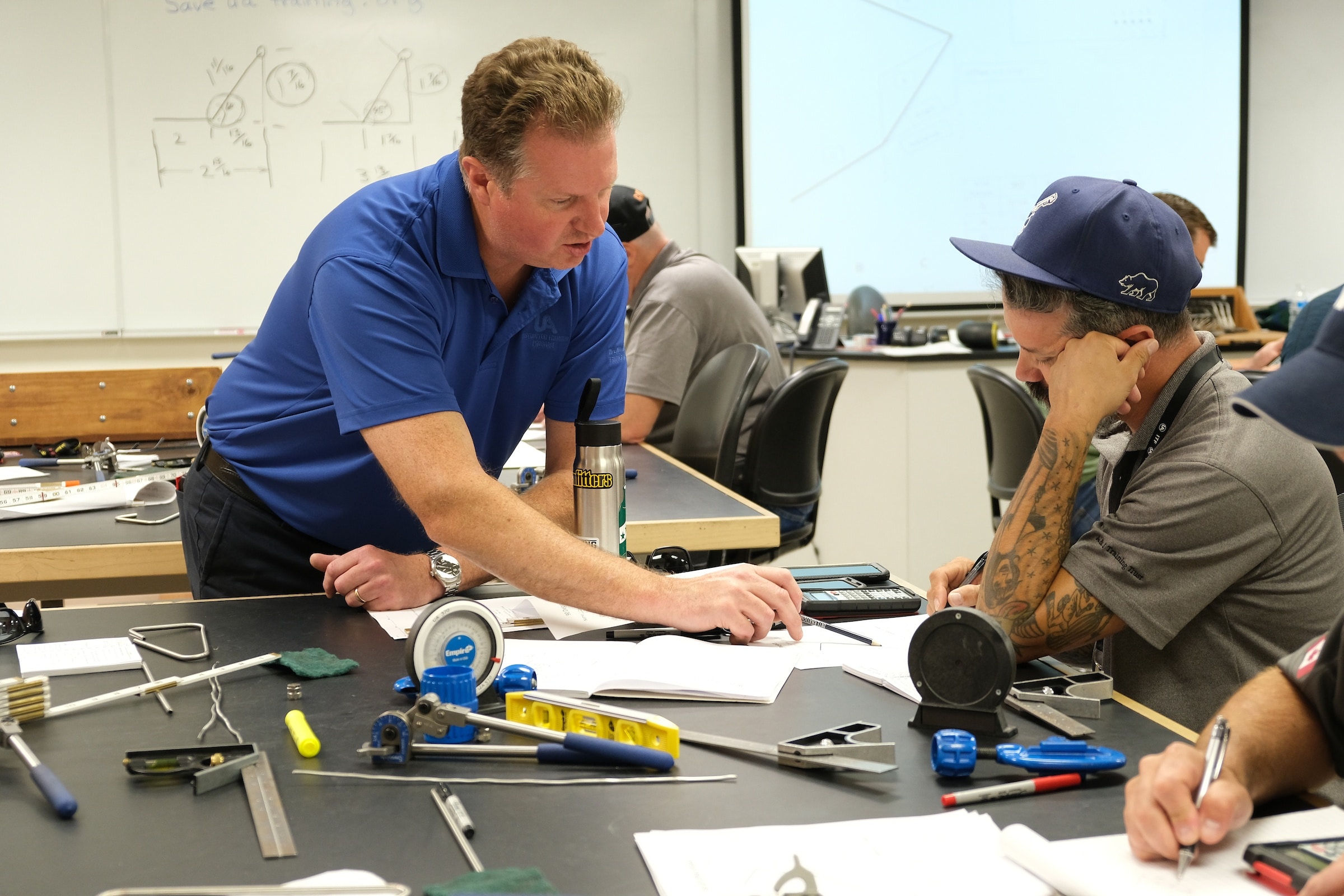
UA educators deliver both classroom and hands-on instruction at more than 300 state-of-the-art training centers throughout North America. Responsibilities include:
Teaching Apprentices and Journeymen
Delivering comprehensive curricula in plumbing, pipefitting, HVACR, welding, sprinkler fitting, and related trades.
Developing Course Materials
Designing lesson plans, training modules, and practical exercises based on current codes, standards, and industry advancements.
Offering individualized support and guidance to help students succeed in their training.
Instilling best practices for workplace safety and code compliance.
Utilizing Technology
Incorporating digital tools, simulation labs, and advanced equipment to enhance the learning experience.
The Benefits of Being a UA Educator
Choosing the educator career path within the UA offers a wealth of personal and professional rewards:
- Make a Difference: Shape the skills, values, and work ethic of future tradesmen and tradeswomen, ensuring the ongoing excellence of the union piping industry.
- Professional Growth: Access ongoing instructor development, advanced certifications, and the latest teaching methodologies.
- Competitive Compensation: Enjoy stable, competitive pay with comprehensive union benefits, healthcare, and retirement plans.
- Leadership Opportunities: Gain recognition as a leader in your Local Union and the broader UA community, influencing curriculum and training standards.
- Continuous Learning: Stay current with industry trends, new technologies, and instructional best practices.
- Earn a College Degree: UA instructors can earn a college degree through the Instructor Training Program.
- Community Impact: Prepare a skilled, safety-focused workforce for high-demand careers to help strengthen your local economy and community.
- Work-Life Balance: Many UA educator roles offer regular schedules and advancement opportunities, supporting both career and personal life.
How to Become a UA Instructor or Training Director
Most UA instructors and coordinators are journeymen or foremen with significant experience in their trade. A strong track record in the field is essential.
Proven teaching or mentoring skills are highly valued. Many instructors start by mentoring apprentices or assisting with training before moving into a formal instructional role.
Obtain Required Certifications
UA instructors must hold relevant trade certifications in areas such as safety, welding, medical gas, or other specialties and be trained in adult education methods. Certified instructors must also complete the UA’s five-year Instructor Training Program.
Joint Apprenticeship Training Committees (JATCs) typically post instructor openings. Express your interest in an open position.
Participate in Instructor Development
Once selected, instructors engage in ongoing professional development, including UA Instructor Training Program courses, to stay current with industry standards, codes, and teaching techniques.
Training Directors often have additional responsibilities, such as managing apprenticeship programs, overseeing curriculum development, coordinating instructor schedules, and ensuring compliance with U.S. Department of Labor or provincial standards.